
The Most Important Layer of Our AI Stack Is Human
Every agency pitch in 2026 includes the same two sentences. "We use AI to move faster. And don't worry, humans review everything."
The first sentence is now table stakes. The second is where organizations should be asking much harder questions, because "humans review everything" usually means a tired person skimming AI output at 5 PM. That is not oversight. That is hope with a headcount.
When we rebuilt the digital platform for No Greater Sacrifice, a nonprofit whose website speaks for Gold Star families and carries the weight of their trust, hope with a headcount was never going to be acceptable. What we used instead is the thing we consider our actual crown jewel. It is not a model. It is not a proprietary algorithm. It is an architecture for judgment.
The AiQ Framework promise
Human intelligence meets artificial intelligence. AiQ is our framework for turning data and AI into business results your users feel and your numbers prove.
We call the layers Human Intelligence, Platform Intelligence, and Applied Intelligence. Human Intelligence defines the outcomes and the boundaries. Platform Intelligence supplies the scale and the speed. Applied Intelligence is what happens where they meet.
Humans decide what the machine is allowed to learn
Human judgment showed up before a single page of the new NGS platform existed.
Before any AI-assisted work began, the platform had to thoroughly understand NGS: their voice, their facts, their decade of history. That knowledge came from organizational documents, existing site content, and years of the organization's own social media, all curated into the AiQ Knowledgebase our agents work from. Every single document passed through a human gate. A person decided what was appropriate for the system to learn from, and what was not.
For an organization serving the families of fallen Service members, what an AI learns from is a trust decision. Trust decisions belong to people. That is not a slogan; it was a checkpoint in the project plan.
The machine's lane ends where meaning begins
Here is the story we tell technology and marketing stakeholders alike, because it captures the whole philosophy in one simple example of why AI alone can't solve the full problem. That taxonomy, not any single feature, is what most "AI-powered" processes are missing.
NGS capitalizes certain words with intention. Scholars. Service members. Alumni. Recipients. It looks like a style rule. It is not a style rule. It is reverence. Those capital letters are how the organization honors the people behind the words.
Our platform includes automated review that scans every page of live content and flags any place those words appear lowercase. The obvious next move is to let the checker auto-correct and move on.
We deliberately built it so it cannot auto-correct. It flags. A human decides. Every time.
Because "alumni-led initiative" might refer to another organization's alumni. A quoted news article must stay exactly as its publisher wrote it. A Scholar's own words are theirs, verbatim. Whether a capital letter is reverent or wrong depends on what the sentence means, and meaning is the human lane. Our system encodes that boundary literally: every editorial rule in the platform is classified as either mechanical, which the machine enforces absolutely, or judgment, which the machine may only flag for human review. The system itself knows where its authority ends.
What human judgment actually caught
Abstract principles sound nice. Concrete moments convince. Here are three real examples from the NGS engagement:
The two true sentences
An AI review flagged a "contradiction" between the site's statement of what a full college degree costs and the organization's per-Scholar funding figures, and proposed a fix. A human editor read both sentences and saw there was no contradiction at all. One described a degree's total cost; the other described NGS's variable role in closing each family's gap. Both were true, deliberately worded, and client-ratified. The machine wanted consistency. The human protected meaning. The "fix" never happened.
Compliant but not right
During accessibility work, a color adjustment passed every mathematical contrast standard and still visibly degraded the organization's signature red, a color with deep brand meaning. No automated check measures dignity. Humans redesigned the approach entirely, moving to a gold treatment on dark backgrounds, rather than ship something technically passing but emotionally wrong.
The sentence every nonprofit writes
By default, when AI generates copy about the mission it would commonly say things along the lines of "families who can't afford college." In many organizations that sentence is right because affordability is their mission. At NGS it never ships, because NGS does not define its mission by what a family can or cannot pay. The gap it funds is what a degree actually costs, less the aid already awarded to the Scholar and NGS closes it, fully. A family reading their own story on this site is never cast as a case of need. No LLM arrives knowing that, because everywhere else it learned from, "afford" is the right word. A human drew that line. The platform's automated review now holds it, on every page, permanently.
Judgment that compounds instead of repeating
Here is the part that makes this an economic argument and not just a values statement.
Most review processes spend human judgment. A person catches a mistake, fixes it, and will have to catch the same category of mistake again next month. Ours invests it. Every human catch during the NGS build became, usually within hours, a permanent automated safeguard: a new rule the machines cannot break again. The person never has to make that particular catch twice.
During the build, roughly one in six changes involved correction. Humans steering in real time. That number is not a confession; it is the visible signature of the system working. And because every correction became infrastructure, the platform got measurably harder to get wrong every single week of the engagement.
That is what we mean when we say the crown jewel is not the technology. Technology you can buy. A system that converts experienced human judgment into compounding, enforceable standards based guardrails takes people who know what good looks like to build it, and to run it.
For the technical leader who wants to see the machinery itself, the gates, the enforcement, the verification doctrine, we wrote Instructions Don't Scale. Guardrails Do. This is the article to send your engineering team.
The honest pitch
If your organization has a deep technical bench that wants to drive AI tooling hands-on, it’s possible that you may not need us. Some of the best engineering teams are building their own tools very successfully.
However, if you are a leader who needs a quality outcome from a platform that moves at AI speed without AI slop, where the brand cannot drift, the facts cannot rot, and the sensitive material is guarded by people, then what you are buying is not a tool. It is the judgment layer. Already built, already staffed, already proven on work as unforgiving as a Gold Star family's trust.
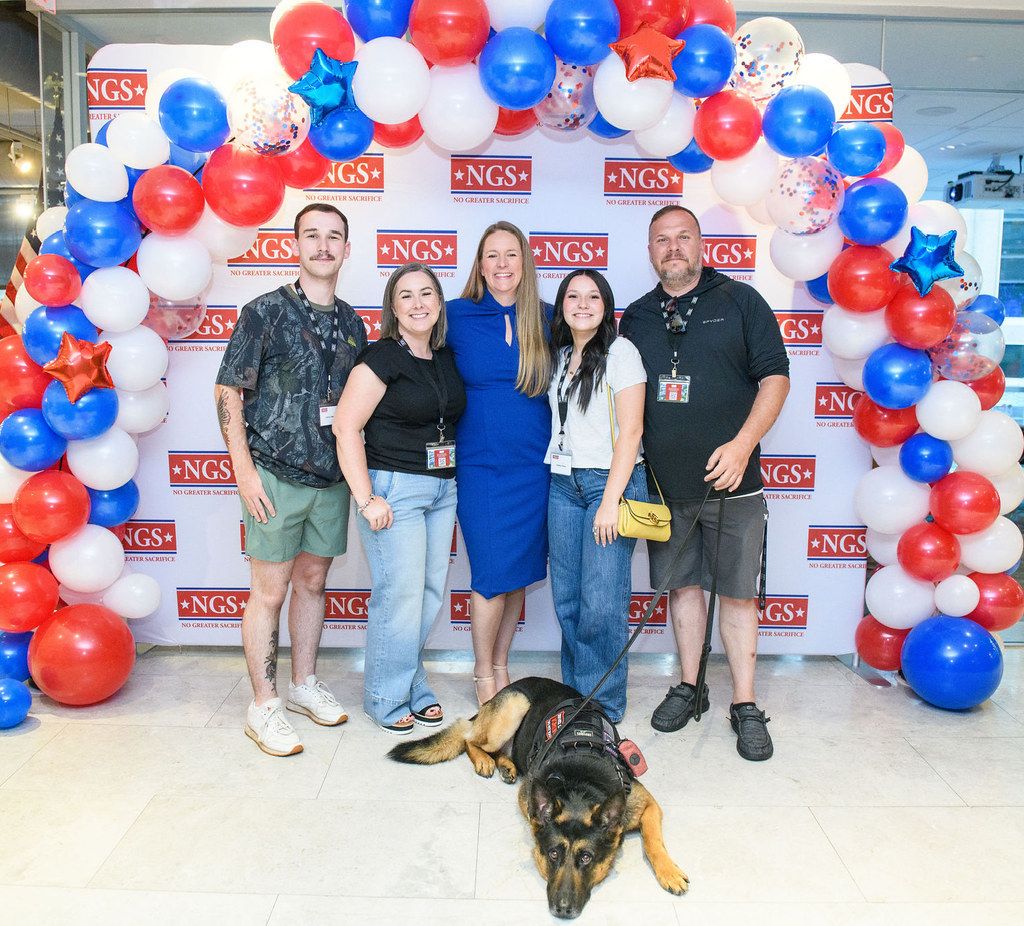
No Greater Sacrifice
Why AI Instructions alone aren’t enough: Instructions Don’t Scale. Guardrails Do.

Steve Hamilton
SVP, DXP and Custom Solutions Practice
Stay Informed
Get industry-leading insights delivered to your inbox.
Industry Leading Insights
Our latest thinking on personalization, digital transformation and experience design